Introduction
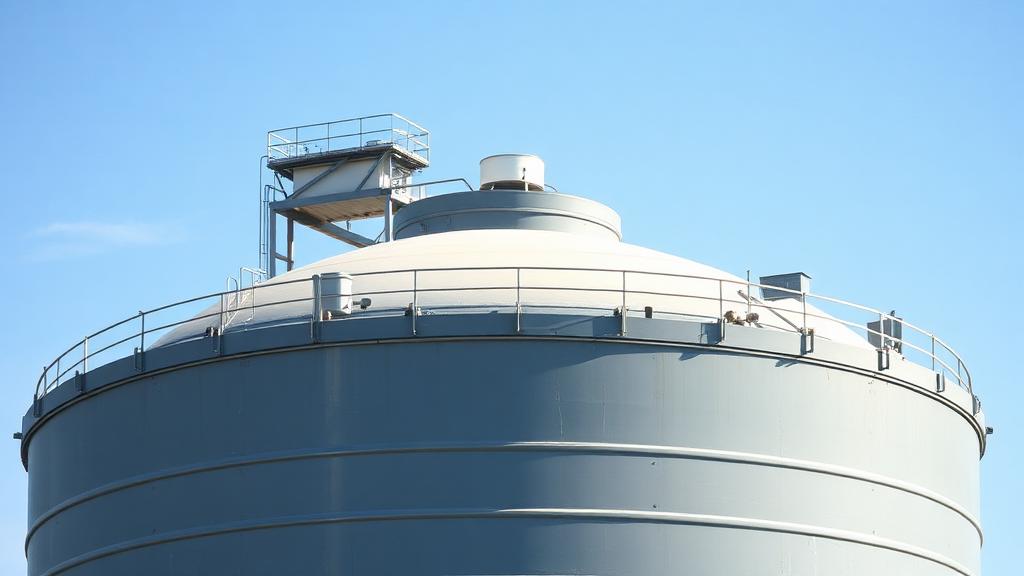
Water storage facilities—including elevated tanks, ground-level reservoirs, and standpipes—are essential components of municipal water distribution systems. They provide the system with pressure equalization, fire flow capacity, and reserve storage for periods of peak demand or supply interruption. Accurate and reliable level monitoring in these facilities is critical for system operation, yet many utilities continue to rely on outdated monitoring technologies that provide limited operational insight.
The evolution of level monitoring technology has produced a range of options that offer improvements in accuracy, reliability, and functionality compared to traditional approaches. Understanding these options and selecting the appropriate technology for each application is essential for optimizing storage facility operations and supporting the broader goals of distribution system management.
The Importance of Accurate Level Monitoring
Storage tank level data serves multiple operational functions. Real-time level information enables operators to manage tank fill and draw cycles to maintain adequate system pressure while avoiding overflows. Level data drives automated pump control, determining when booster pumps or high-service pumps activate and deactivate to maintain tank levels within desired operating ranges.
Historical level data supports planning and optimization activities. Analysis of fill and draw patterns reveals information about demand patterns, system capacity utilization, and water age within the tank. This information can be used to optimize pump schedules, reduce energy costs, and improve water quality by minimizing retention time.
Level monitoring also supports asset management by enabling detection of leaks, structural issues, and equipment malfunctions. Unusual level patterns—such as unexplained drops in level or changes in fill rates—can indicate problems that warrant investigation.
Level Measurement Technologies
Several technologies are available for storage tank and reservoir level measurement, each with distinct characteristics that make it more or less suitable for specific applications.
Submersible pressure transmitters are the most widely used technology for water storage tank level measurement. These instruments measure the hydrostatic pressure at the bottom of the tank and convert it to a level reading. They are relatively inexpensive, easy to install, and provide good accuracy for most applications. However, they require periodic maintenance, including calibration verification and cable inspection, and can be affected by changes in water density.
Ultrasonic level sensors mount at the top of the tank and measure level by timing the echo of an ultrasonic pulse reflected from the water surface. They are non-contact, eliminating concerns about sensor fouling or corrosion, and are relatively easy to install and maintain. However, their accuracy can be affected by temperature variations, foam, condensation, and obstructions within the tank.
Radar level sensors, both guided wave and free-space types, provide high accuracy and reliability in storage tank applications. Guided wave radar uses a probe that extends into the liquid to guide the measurement signal, while free-space radar transmits the signal through the air to the liquid surface. Radar sensors are largely immune to temperature variations and atmospheric conditions, making them well-suited for applications where environmental factors may affect other technologies.
Capacitance and hydrostatic pressure-based systems continue to serve in many applications. Capacitance sensors measure level based on the change in electrical capacitance as the liquid level rises or falls around a sensing probe. These sensors are simple, robust, and cost-effective for many applications.
Communication and Integration
Storage tank level data must be communicated reliably from the tank site to the central monitoring facility. The communication infrastructure is often as critical as the level sensor itself, since a loss of communication can leave operators without visibility into tank conditions.
Cellular communication has become the preferred technology for remote tank monitoring due to its wide coverage, reasonable cost, and adequate bandwidth. Modern cellular modems provide reliable connectivity for transmitting level data, alarms, and diagnostic information to the central SCADA system.
For applications where cellular coverage is unavailable or unreliable, radio communication or satellite-based systems provide alternatives. Some utilities maintain private radio networks that provide dedicated communication channels for critical infrastructure monitoring.
Integration with the central SCADA system enables comprehensive management of storage facilities across the distribution system. Modern SCADA platforms provide graphical displays showing real-time levels at all monitored tanks, along with trend displays, alarm management, and automated reporting capabilities.
Operational Optimization
Advanced level monitoring systems enable several operational optimization strategies that can reduce costs and improve service quality.
Pump schedule optimization uses level data from multiple tanks to determine the most efficient pump operation strategy. By filling tanks during off-peak electricity rate periods and drawing them down during peak rate periods, utilities can significantly reduce pumping energy costs. This strategy requires reliable real-time level data and predictive models that account for demand patterns and system hydraulics.
Water age management is increasingly important for water quality in distribution systems. Storage tanks can be significant contributors to water age if they are oversized or if their fill and draw cycles do not promote adequate turnover. Level monitoring data can be analyzed to identify tanks with poor turnover and to develop operational strategies that improve mixing and reduce water age.
Overflow prevention is a fundamental function of tank level monitoring. Automated high-level alarms and pump shutdown interlocks prevent overfilling, while trending analysis can identify conditions that increase overflow risk. Some systems incorporate predictive algorithms that anticipate high-level conditions based on current fill rates and demand patterns.
Maintenance and Inspection
Level monitoring instruments require regular maintenance to ensure continued accuracy and reliability. Maintenance requirements vary by technology, but common activities include calibration verification, sensor cleaning, cable inspection, and communication system testing.
Many modern level sensors incorporate self-diagnostic capabilities that can detect and report sensor issues before they affect measurement quality. Remote diagnostic access enables maintenance personnel to assess sensor status without traveling to the tank site, reducing maintenance costs and improving response time.
Tank inspection and maintenance programs should be coordinated with level sensor maintenance to take advantage of opportunities to access instruments for calibration, cleaning, or replacement. Periodic comparison of sensor readings with independent measurements, such as manual tape readings, provides verification of measurement accuracy.
Conclusion
Accurate and reliable level monitoring is essential for the effective operation of water storage facilities. Modern sensor technologies, communication systems, and data analytics capabilities provide utilities with powerful tools for optimizing storage facility operations, reducing costs, and improving service quality. By investing in appropriate monitoring infrastructure and developing data-driven operating strategies, utilities can maximize the value of their storage assets while ensuring reliable service to their customers.