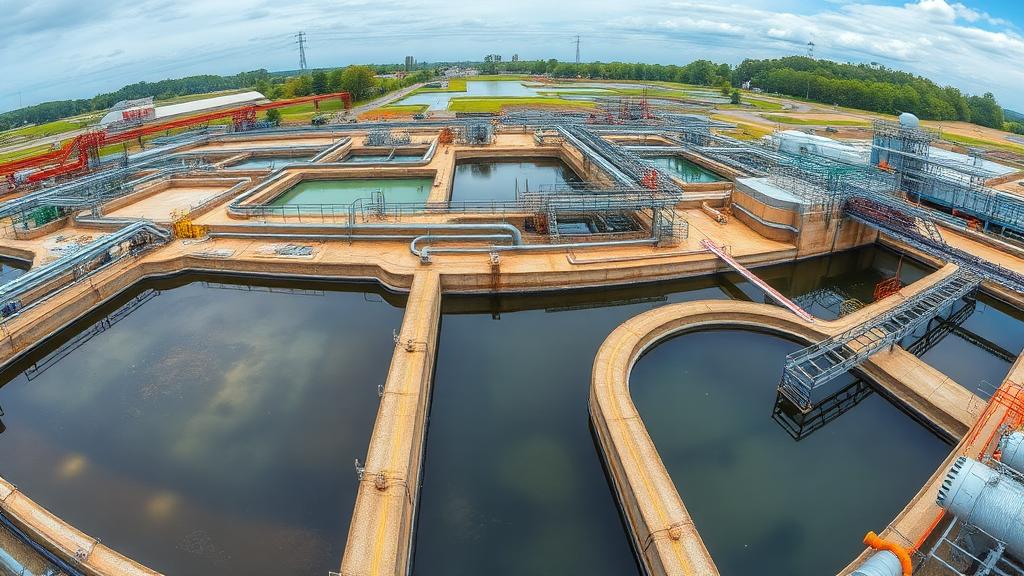
Modern wastewater treatment demands continuous, accurate measurement at every stage of the process. From raw sewage entering the headworks to treated effluent meeting discharge permits, instrumentation provides the data that drives operational decisions, ensures regulatory compliance, and identifies opportunities for energy optimization. Understanding what to measure, where to measure it, and how to integrate that data into actionable intelligence is the foundation of effective treatment plant operations.
Influent Monitoring: Understanding What's Coming In
Effective treatment begins with understanding influent characteristics. Flow measurement at the headworks establishes the baseline for process control, capacity planning, and permit compliance. Open channel flow meters — typically using flumes or weirs with ultrasonic level sensors — provide continuous influent flow measurement with the accuracy needed for regulatory reporting.
Beyond flow, influent characterization instruments provide early warning of process upsets that could compromise treatment performance. Online analyzers for BOD, COD, TSS, pH, and temperature give operators the information they need to adjust process parameters proactively rather than reactively. During storm events, influent flow and loading can change dramatically within minutes, making real-time measurement essential for maintaining treatment performance.
Combined sewer systems present additional monitoring challenges. Stormwater inflow and infiltration (I&I) can dramatically increase influent volume while diluting organic loading, requiring different treatment strategies than dry weather conditions. Instrumentation that distinguishes between sanitary flow and stormwater contribution enables more efficient process control during wet weather events.
Primary Treatment Instrumentation
Primary treatment — screening, grit removal, and primary clarification — benefits from instrumentation that monitors both process performance and equipment health. Bar screen differential level measurement detects blinding conditions that reduce screening effectiveness. Grit chamber instrumentation monitors grit removal efficiency and equipment wear.
Primary clarifier instrumentation typically includes sludge blanket level measurement, effluent turbidity or TSS analyzers, and flow measurement on sludge withdrawal lines. Sludge blanket interface detectors — using ultrasonic or optical technologies — enable automated sludge withdrawal that optimizes solids capture while minimizing hydraulic loading on downstream processes.
Pump and lift station monitoring extends beyond simple on/off status. Variable frequency drive instrumentation provides real-time data on pump speed, power consumption, and efficiency. Vibration monitoring detects bearing wear and impeller damage before catastrophic failure occurs. Wet well level measurement with redundant sensors ensures reliable pump control even when primary sensors fail.
Secondary Treatment: Where Energy Meets Process Control
Secondary treatment — particularly the activated sludge process — is where instrumentation has the greatest impact on both treatment performance and energy consumption. The aeration basin alone typically consumes 50-60% of total plant energy, making dissolved oxygen (DO) control the single most important instrumentation application for both process optimization and energy efficiency.
Modern DO control systems use multiple dissolved oxygen sensors distributed throughout the aeration basin to maintain optimal oxygen levels across the entire treatment volume. These sensors feed real-time data to automated blower control systems that adjust air delivery to match actual oxygen demand rather than operating at fixed setpoints. The energy savings from automated DO control typically range from 15-30% of aeration energy costs, often providing payback on instrumentation investments within 12-18 months.
Nutrient monitoring instrumentation has become increasingly important as EPA and state agencies tighten discharge limits for nitrogen and phosphorus. Online analyzers for ammonia (NH₃), nitrate, and total phosphorus provide the real-time data needed for biological nutrient removal (BNR) process control. Without continuous nutrient monitoring, operators must rely on grab samples and laboratory analysis — a process that introduces hours of delay between measurement and process adjustment.
Mixed liquor suspended solids (MLSS) measurement in the aeration basin supports solids retention time (SRT) control, which directly affects treatment performance and sludge production. Optical TSS sensors provide continuous MLSS measurement without the maintenance requirements of older density-based instruments. This data, combined with return activated sludge (RAS) and waste activated sludge (WAS) flow measurement, enables precise SRT control.
Effluent Monitoring and Compliance
Effluent monitoring instrumentation provides the final verification that treatment processes are producing water quality that meets discharge permit requirements. Continuous monitoring of pH, turbidity, TSS, and chlorine residual (or UV transmittance for UV disinfection systems) ensures that every gallon of effluent meets regulatory standards.
Chlorine disinfection systems require careful instrumentation for both effectiveness and environmental protection. Chlorine dosing must be sufficient to achieve required pathogen reduction, but excessive chlorine in the effluent can harm receiving water ecosystems. Chlorine residual analyzers — combined with flow-paced chemical feed systems — optimize disinfection performance while minimizing chemical usage and environmental impact.
UV disinfection monitoring focuses on UV transmittance and UV intensity measurement to verify that pathogen reduction targets are being met. UV system instrumentation also monitors lamp status, sleeve fouling, and power consumption to optimize system performance and maintenance scheduling.
For facilities with nutrient discharge limits, effluent nutrient analyzers provide continuous compliance verification and early warning of permit exceedances. These analyzers must meet EPA method requirements for accuracy and reliability, with appropriate quality assurance procedures including automated calibration verification and sensor diagnostics.
Sludge Train Monitoring
The sludge handling process — from primary and secondary sludge thickening through digestion, dewatering, and final disposal — requires its own complement of instrumentation. Sludge flow measurement using electromagnetic or Coriolis meters tracks solids loading through each processing stage. Solids concentration measurement at thickener and dewatering equipment outlets verifies process performance.
Anaerobic digester instrumentation includes temperature, pH, volatile acids/alkalinity ratio, and biogas production measurement. These parameters provide early warning of digester upset conditions that could compromise biogas quality and solids reduction performance. Biogas flow and composition measurement supports gas utilization systems including combined heat and power (CHP) installations.
SCADA Integration and Real-Time Analytics
Individual instruments provide valuable data, but the real power of comprehensive instrumentation comes from integration. SCADA (Supervisory Control and Data Acquisition) systems collect data from all measurement points and present it in unified operator interfaces that show the complete treatment process in real time.
Open communication protocols — Modbus RTU/TCP, BACnet, and OPC-UA — ensure that instruments from multiple manufacturers can communicate with any SCADA platform. This protocol flexibility prevents vendor lock-in and allows utilities to select the best instrument for each application regardless of manufacturer.
Cloud-based analytics platforms extend SCADA capability by providing remote access to operational data, automated reporting, trend analysis, and predictive analytics. These platforms enable utility managers, regulators, and engineering consultants to access operational data from any location, supporting both routine management and emergency response.
Energy Submetering Across the Plant
Understanding where energy is consumed within the treatment process is essential for identifying optimization opportunities. Energy submetering at major process areas — headworks, primary treatment, aeration, secondary clarification, disinfection, sludge processing, and building systems — provides the granular data needed to benchmark performance, identify waste, and verify the impact of efficiency improvements.
Emergent Energy's submetering solutions include electric, gas, steam, and BTU measurement with cloud analytics dashboards that present energy data in operational context. Circuit-level energy intelligence reveals consumption patterns that aggregate utility bills cannot, enabling targeted efficiency improvements with measurable results.
Conclusion
Complete instrumentation coverage transforms wastewater treatment from a reactive operation to a proactive, data-driven process. By monitoring every stage of treatment with appropriate, well-maintained, and properly integrated instrumentation, municipal utilities achieve better treatment performance, lower energy costs, reliable regulatory compliance, and extended infrastructure life. Emergent Energy provides the turnkey instrumentation services — from assessment through ongoing analytics — that make comprehensive monitoring achievable for facilities of any size.