Introduction
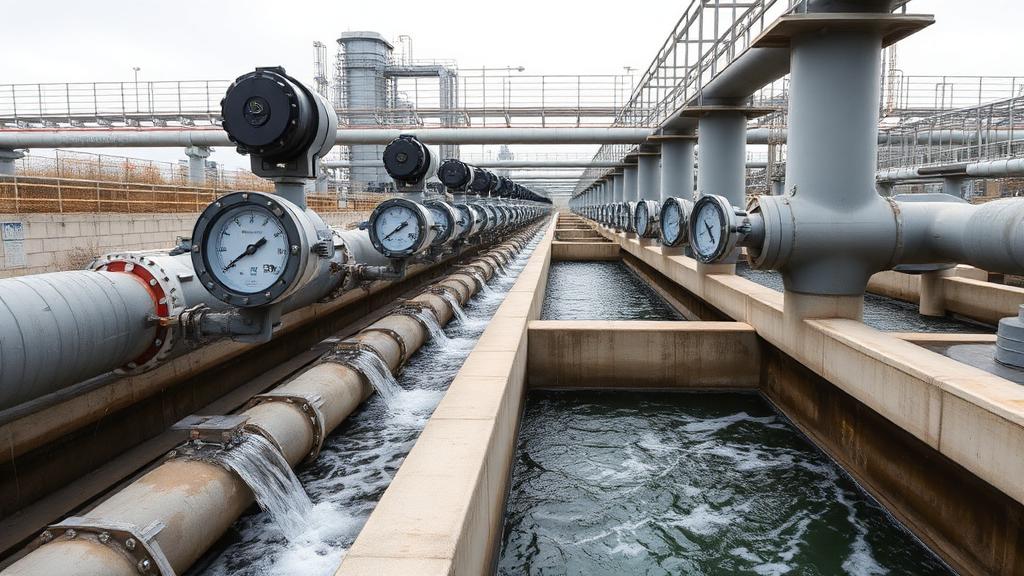
Municipal wastewater treatment facilities across the United States face an ongoing challenge that directly impacts their operational efficiency, regulatory compliance, and long-term sustainability: accurate influent flow measurement. As treatment processes become more sophisticated and regulatory requirements grow increasingly stringent, the need for precise, reliable flow measurement at the headworks has never been more critical.
The accuracy of influent flow measurement affects virtually every downstream process in a wastewater treatment plant. From chemical dosing calculations to capacity planning, from billing accuracy to regulatory reporting, the data generated by influent flow meters serves as the foundation upon which operational decisions are made. Yet many facilities continue to rely on aging infrastructure and outdated measurement technologies that introduce significant uncertainty into their process control systems.
The Current State of Influent Flow Measurement
Traditional approaches to influent flow measurement have relied heavily on primary devices such as Parshall flumes and Palmer-Bowlus flumes, paired with ultrasonic level sensors. While these technologies have served the industry well for decades, they come with inherent limitations that modern alternatives can address.
Open channel flow measurement using flumes requires careful installation and ongoing maintenance to ensure accuracy. Sediment accumulation, changes in approach conditions, and structural degradation can all compromise measurement quality over time. Additionally, the accuracy of ultrasonic level sensors can be affected by temperature variations, foam, and atmospheric conditions within the channel.
Electromagnetic flow meters have emerged as a superior alternative for many applications, offering several advantages over traditional open-channel measurement. These instruments measure flow directly, eliminating the need for level-to-flow conversion calculations and the associated uncertainties. They are unaffected by changes in fluid properties such as temperature, density, and conductivity within normal operating ranges.
Advanced Technologies Reshaping the Field
The latest generation of electromagnetic flow meters incorporates advanced signal processing algorithms that can extract accurate flow measurements even in challenging conditions. Digital signal processing enables these instruments to filter out electrical noise, compensate for electrode fouling, and maintain calibration stability over extended periods.
Area-velocity meters represent another significant advancement in influent flow measurement. These instruments combine depth measurement with velocity profiling to calculate flow rates, making them particularly well-suited for applications where full-pipe conditions cannot be guaranteed. Modern area-velocity meters use Doppler ultrasonic technology to measure velocity across multiple zones within the flow profile, providing a more representative average velocity than single-point measurements.
Radar-based level measurement has also gained traction in wastewater applications. Non-contact radar sensors are immune to many of the environmental factors that affect ultrasonic sensors, including temperature variations, foam, and condensation. Guided wave radar offers even greater accuracy and reliability, though it requires contact with the measured medium.
Integration with SCADA and Process Control
Modern flow measurement systems are designed for seamless integration with supervisory control and data acquisition (SCADA) systems. Digital communication protocols such as HART, Profibus, and Modbus enable flow meters to transmit not only instantaneous flow readings but also diagnostic information that can be used for predictive maintenance and quality assurance.
The integration of flow measurement data with other process parameters enables advanced process control strategies. For example, correlating influent flow with upstream rainfall data and downstream dissolved oxygen levels can enable predictive aeration control, reducing energy consumption while maintaining effluent quality.
Cloud-based data analytics platforms are adding another dimension to flow measurement. By aggregating data from multiple measurement points and applying machine learning algorithms, these platforms can identify trends, detect anomalies, and provide early warning of equipment issues before they affect measurement accuracy.
Regulatory Compliance and Data Quality
The EPA and state regulatory agencies require wastewater treatment plants to maintain accurate records of influent and effluent flows. The accuracy requirements for flow measurement typically range from plus or minus two to five percent, depending on the specific regulatory framework and the size of the facility.
Maintaining compliance requires not only accurate instruments but also robust quality assurance and quality control procedures. Regular calibration verification, comparison between redundant measurement systems, and documentation of maintenance activities are all essential components of a comprehensive flow measurement quality program.
Modern flow meters can significantly reduce the burden of compliance by providing built-in verification capabilities. Self-diagnostic functions can detect issues such as electrode coating, signal degradation, and electronic drift, alerting operators to potential problems before they affect data quality. Some instruments even include integral verification features that can confirm measurement accuracy without interrupting the process or removing the meter from service.
Cost-Benefit Analysis of Upgrading
The decision to upgrade influent flow measurement systems involves balancing capital costs against operational benefits. While modern instruments typically carry higher purchase prices than their predecessors, the total cost of ownership is often lower when considering factors such as reduced maintenance requirements, improved accuracy, and lower energy consumption.
Improved flow measurement accuracy can also generate direct financial benefits. More accurate influent flow data enables better chemical dosing, reducing chemical consumption and costs. Better flow data also supports more efficient aeration control, which can significantly reduce electrical costs, given that aeration typically accounts for forty to sixty percent of a treatment plant's energy consumption.
For facilities that bill industrial users based on flow, improved measurement accuracy can also affect revenue. Under-reporting of industrial flows due to measurement inaccuracy represents a direct loss of revenue for the utility.
Implementation Best Practices
Successful implementation of new flow measurement technology requires careful planning and execution. Site surveys should assess hydraulic conditions, including approach velocities, turbulence levels, and the presence of solids or grease that could affect instrument performance. Environmental conditions such as temperature extremes, humidity, and the presence of corrosive gases should also be evaluated.
Installation quality is critical to measurement accuracy. Even the most advanced flow meter will perform poorly if installed incorrectly. Manufacturer recommendations for upstream and downstream straight-run requirements, mounting orientation, and grounding should be followed precisely.
Commissioning should include verification of measurement accuracy using reference methods such as volumetric testing or comparison with portable reference instruments. Baseline data should be collected and documented to establish a reference point for future performance monitoring.
Looking Ahead
The convergence of advanced sensor technology, digital communication, and data analytics is creating new possibilities for influent flow measurement. As these technologies continue to mature and become more accessible, wastewater treatment facilities of all sizes will have the opportunity to improve their measurement capabilities and, by extension, their overall operational performance.
The trend toward smart water infrastructure will further drive innovation in flow measurement. As utilities invest in digital transformation, flow measurement systems will become integral components of comprehensive monitoring networks that provide real-time visibility into system performance from source to discharge.
Facilities that invest in modern flow measurement technology today will be well-positioned to meet the challenges of tomorrow, including increasingly stringent regulatory requirements, growing pressure to reduce energy consumption, and the need to do more with limited resources.