Introduction
Collection system lift stations are among the most critical—and most vulnerable—components of municipal wastewater infrastructure. These unmanned facilities operate around the clock, pumping wastewater from lower elevations to higher ones, overcoming the limitations of gravity-based collection systems. When a lift station fails, the consequences can be severe: sanitary sewer overflows (SSOs), environmental contamination, regulatory violations, and public health risks.
Despite their importance, many lift stations receive minimal monitoring beyond basic high-level alarms and periodic visual inspections. This reactive approach leaves facilities vulnerable to equipment failures, capacity exceedances, and operational inefficiencies that could be prevented with modern monitoring instrumentation.
The Case for Comprehensive Lift Station Monitoring
The average municipal wastewater utility operates dozens to hundreds of lift stations across its service area. Each station represents a potential point of failure in the collection system. The traditional approach of relying on high-level alarms and routine inspections is increasingly inadequate for several reasons.
First, high-level alarms are inherently reactive. By the time a high-level alarm is triggered, the station may already be at or near overflow conditions. The response time required for maintenance crews to reach remote stations can be substantial, particularly during nights, weekends, and holidays when staffing levels are reduced.
Second, periodic inspections provide only snapshots of station condition and performance. Problems that develop between inspections may go undetected until they cause a failure or alarm condition. Intermittent issues, such as pump cycling anomalies or rising wet well levels, may not be present during a scheduled inspection.
Third, the aging infrastructure in many collection systems means that equipment failures are becoming more frequent. Pumps, controls, and electrical systems that have been in service for twenty or thirty years are increasingly prone to failure, making early detection of developing problems all the more important.
Essential Monitoring Parameters
A comprehensive lift station monitoring system should measure and record several key parameters that together provide a complete picture of station health and performance.
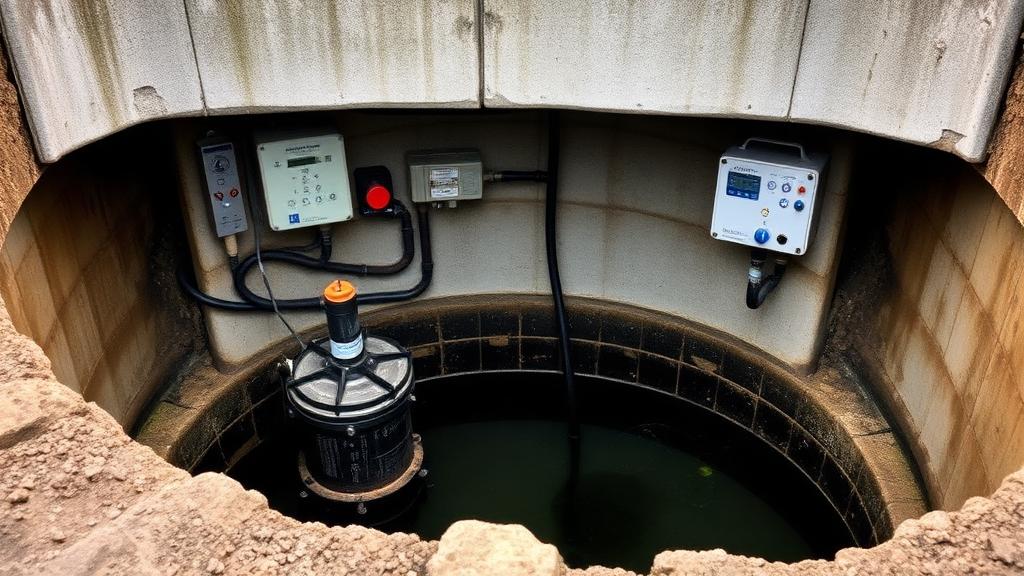
Wet well level is the most fundamental measurement, providing direct indication of the volume of wastewater in the station. Continuous level monitoring enables tracking of inflow patterns, pump cycling behavior, and storage utilization. Submersible pressure transmitters and ultrasonic level sensors are the most common technologies for wet well level measurement.
Pump run status and run time monitoring enables tracking of individual pump operation. By recording when each pump starts and stops, the monitoring system can calculate run times, cycle counts, and rest periods. This data is essential for identifying issues such as excessive cycling, which accelerates wear and increases energy consumption, or pump lockout conditions.
Power monitoring, including voltage, current, and power factor measurement, provides insight into pump motor health. Changes in current draw can indicate developing mechanical problems such as bearing wear, impeller damage, or blockages. Power monitoring also supports energy management by quantifying station energy consumption and efficiency.
Vibration monitoring on pump motors and bearings can detect mechanical problems in their early stages, well before they progress to failure. Modern vibration sensors can be installed permanently and transmit data continuously, enabling trend analysis and automated alerting when vibration levels exceed established thresholds.
Flow measurement at lift stations provides direct data on pumping capacity and system throughput. Electromagnetic flow meters installed on the discharge piping can measure instantaneous and totalized flow, enabling accurate capacity assessment and I&I (infiltration and inflow) analysis.
Communication and SCADA Integration
Reliable communication between remote lift stations and the central monitoring facility is essential for effective monitoring. Several communication technologies are available, each with advantages and limitations depending on the specific application.
Cellular communication has become the dominant technology for lift station monitoring due to its wide coverage, reasonable cost, and adequate bandwidth for SCADA data transmission. Modern cellular modems support 4G LTE and 5G networks, providing reliable, high-speed connectivity for most applications.
Radio communication, including licensed and unlicensed frequencies, remains viable for applications where cellular coverage is limited or where the utility prefers to maintain its own communication infrastructure. Spread-spectrum radio systems offer good range and resistance to interference.
Satellite communication provides coverage in areas where neither cellular nor radio communication is practical. While historically expensive and limited in bandwidth, modern satellite services have become more affordable and capable, making them a viable option for remote stations.
Integration with the central SCADA system enables operators to monitor and manage all lift stations from a single interface. Modern SCADA platforms provide mapping displays, alarm management, trend analysis, and reporting capabilities that support both real-time operations and long-term performance management.
Predictive Maintenance and Analytics
The data generated by comprehensive monitoring systems enables a shift from reactive to predictive maintenance strategies. By analyzing trends in operating parameters, utilities can identify developing problems and schedule maintenance before failures occur.
Pump performance curves can be established during commissioning and compared with ongoing operating data. A decline in pump performance—indicated by reduced flow at a given head or increased power consumption—can signal impeller wear, air entrainment, or other issues that warrant investigation.
Machine learning algorithms are increasingly being applied to lift station monitoring data to detect anomalies and predict failures. These algorithms can identify patterns in the data that may not be apparent to human operators, providing early warning of developing problems.
Overflow Prevention and Compliance
Sanitary sewer overflows are among the most serious regulatory violations a wastewater utility can face. The EPA's enforcement policy for SSOs includes significant penalties, and many utilities operate under consent decrees that impose strict requirements for overflow prevention and reporting.
Comprehensive lift station monitoring directly supports overflow prevention by providing early warning of conditions that could lead to overflows. Automated alerts for high wet well levels, pump failures, power outages, and communication losses enable rapid response to developing situations.
When overflows do occur, monitoring data provides the documentation needed for regulatory reporting. Continuous level and flow data can establish the timing, duration, and estimated volume of an overflow, supporting accurate reporting to regulatory agencies.
Implementation Considerations
Implementing a comprehensive lift station monitoring program requires careful planning and prioritization. Most utilities cannot upgrade all stations simultaneously, so a risk-based approach to prioritization is recommended.
Factors to consider when prioritizing stations for monitoring upgrades include station capacity and criticality, proximity to sensitive receiving waters, overflow history, equipment age and condition, and accessibility for maintenance response.
Standardization of monitoring equipment and communication protocols across the system simplifies maintenance, training, and spare parts management. Selecting equipment from a limited number of suppliers and establishing standard installation details can reduce both initial costs and long-term maintenance burden.
Conclusion
Comprehensive lift station monitoring is no longer a luxury but a necessity for responsible collection system management. The technology is mature, the costs are reasonable, and the benefits—including overflow prevention, regulatory compliance, and extended equipment life—are well-documented. Utilities that invest in modern monitoring infrastructure will be better equipped to manage their collection systems effectively and protect public health and the environment.