Introduction
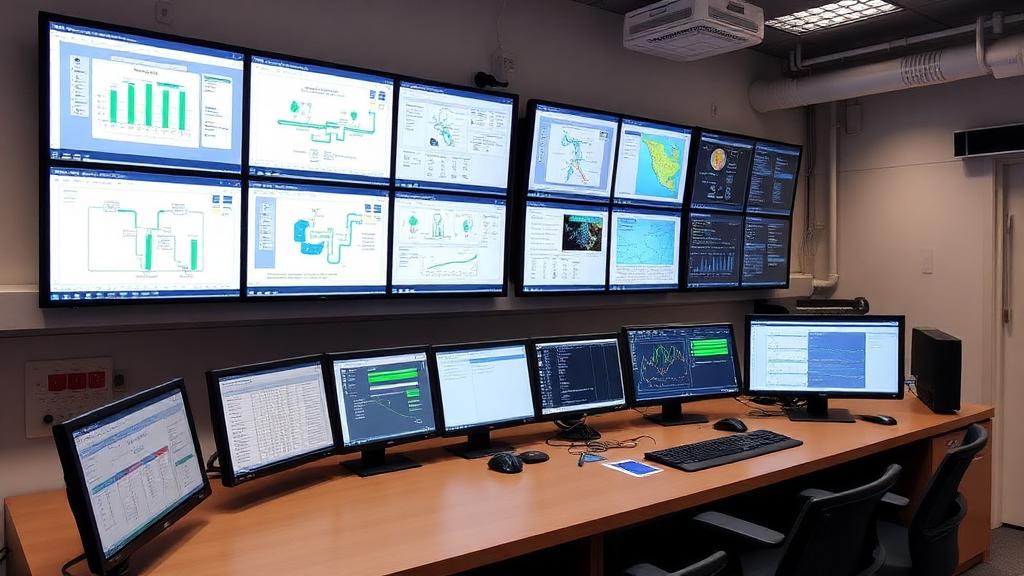
Supervisory Control and Data Acquisition (SCADA) systems are the nervous system of modern water and wastewater facilities. They collect data from field instruments, provide operators with real-time visibility into process conditions, execute control strategies, and generate the historical records needed for compliance reporting and operational optimization. The effectiveness of a SCADA system depends not only on the software and hardware platforms but also on how well field instruments are integrated into the system.
SCADA integration encompasses the physical connections, communication protocols, data configuration, and quality assurance procedures that ensure reliable data flow from field instruments to the central monitoring and control system. Poor integration can result in unreliable data, communication failures, and control system malfunctions that undermine the entire purpose of the SCADA investment.
Communication Protocols and Standards
The selection of communication protocols is one of the most fundamental decisions in SCADA system design. Several protocols are widely used in water and wastewater applications, each with distinct characteristics that affect performance, interoperability, and cost.
Modbus, both RTU (serial) and TCP (Ethernet), remains one of the most widely used protocols in the water industry due to its simplicity, broad device support, and well-documented specifications. Modbus RTU operates over RS-485 serial connections and is well-suited for connecting small numbers of devices over moderate distances. Modbus TCP operates over standard Ethernet networks and provides higher speeds and easier network configuration.
HART (Highway Addressable Remote Transducer) protocol provides digital communication over the same two-wire connections used for 4-20 mA analog signals. This allows HART-enabled instruments to provide both analog process values and digital diagnostic information without additional wiring. HART is particularly valuable for instrument diagnostics, configuration, and calibration, enabling maintenance personnel to access detailed instrument information remotely.
DNP3 (Distributed Network Protocol) is widely used for communication between SCADA master stations and remote terminal units (RTUs) in distributed water and wastewater systems. DNP3 provides robust data integrity features, time-stamped data, and efficient bandwidth utilization that make it well-suited for communication over wide-area networks.
OPC UA (Open Platform Communications Unified Architecture) represents the latest evolution in industrial communication standards. OPC UA provides platform-independent, secure communication between devices, applications, and enterprise systems. Its information modeling capabilities enable rich data exchange that goes beyond simple process values to include metadata, quality information, and contextual data.
Network Architecture and Reliability
The network architecture supporting SCADA communication must be designed for high reliability, since communication failures can result in loss of monitoring and control capability. Redundancy at multiple levels—including redundant network paths, redundant communication processors, and redundant power supplies—is essential for critical applications.
Network segmentation provides both reliability and security benefits. By separating the process control network from the business network, the SCADA system is insulated from network congestion and security threats that may affect the broader enterprise network. Industrial firewalls and demilitarized zones (DMZs) control the flow of data between the process control network and other networks.
Virtual private networks (VPNs) provide secure remote access to SCADA systems for authorized personnel. VPN connections should use strong encryption and multi-factor authentication to prevent unauthorized access. Remote access policies should define who can access the system, what actions they can perform, and under what circumstances remote access is permitted.
Data Quality and Integrity
The value of SCADA data depends entirely on its quality and integrity. Poor-quality data can lead to incorrect operational decisions, unreliable compliance reports, and missed opportunities for optimization. Several practices can help ensure data quality throughout the SCADA system.
Proper scaling and engineering unit configuration ensures that raw instrument signals are correctly converted to meaningful process values. Errors in scaling configuration—such as incorrect range settings or reversed zero and span values—can introduce systematic errors that persist until discovered and corrected.
Alarm configuration is a critical aspect of data quality that directly affects operator effectiveness. Alarm systems should be designed to alert operators to significant events that require their attention while minimizing nuisance alarms that can lead to alarm fatigue. The ISA-18.2 standard provides guidance on alarm management practices, including alarm rationalization, prioritization, and performance monitoring.
Data historian configuration determines how process data is stored and made available for historical analysis. Historians typically use compression algorithms to reduce storage requirements, but aggressive compression can discard important process details. The compression settings should be configured based on the characteristics of each signal and the intended use of the historical data.
Instrument Integration Procedures
The integration of individual instruments into the SCADA system should follow standardized procedures that ensure consistency and quality. A typical integration procedure includes several key steps.
Pre-integration testing verifies that the instrument is functioning correctly before it is connected to the SCADA system. This includes verification of measurement accuracy, communication functionality, and diagnostic capabilities.
Channel and point configuration in the SCADA system creates the data points that correspond to each instrument signal. This includes configuring the communication address, data type, scaling parameters, alarm limits, and historical storage parameters.
Loop checking verifies the complete signal path from the field instrument through the communication infrastructure to the SCADA display. This includes verification of correct engineering unit display, alarm activation, and control functionality.
Documentation of the integration, including as-built drawings, configuration records, and test results, provides a reference for future maintenance and troubleshooting. This documentation should be maintained and updated as changes are made to the system.
Cybersecurity Considerations
SCADA systems in water and wastewater facilities are increasingly targeted by cyber threats. The consequences of a successful cyberattack on a water system can be severe, including disruption of water service, contamination of drinking water, and environmental damage from uncontrolled discharges.
The NIST Cybersecurity Framework provides a structured approach to managing cybersecurity risk in critical infrastructure. Key elements include identifying assets and risks, protecting systems with appropriate controls, detecting security events, responding to incidents, and recovering from disruptions.
Instrument-level security is often overlooked but is an important component of overall SCADA security. Instruments with digital communication capabilities should be configured with appropriate access controls to prevent unauthorized changes to instrument settings. Default passwords should be changed, and unused communication ports and services should be disabled.
Testing and Commissioning
Thorough testing and commissioning is essential for ensuring that the SCADA system performs as designed. Testing should be conducted at multiple levels, from individual instrument testing to full system integration testing.
Factory acceptance testing (FAT) verifies that SCADA hardware and software meet specifications before shipment to the site. Site acceptance testing (SAT) verifies proper installation and configuration in the actual operating environment. Performance testing verifies that the system meets performance requirements for data acquisition rates, communication response times, and alarm processing.
Operator training is a critical component of commissioning that is often underemphasized. Operators must be thoroughly trained on the SCADA system's capabilities, including normal operations, alarm response, and emergency procedures. Training should include hands-on exercises using the actual system in realistic scenarios.
Conclusion
Effective SCADA integration is the foundation upon which reliable monitoring, efficient control, and informed decision-making are built. By following best practices for communication protocol selection, network design, data quality management, and cybersecurity, water and wastewater facilities can create SCADA systems that serve as true force multipliers for their operations. The investment in proper integration pays dividends throughout the life of the system in the form of reliable data, efficient operations, and confident compliance.