Introduction
The water utility industry is in the midst of a technological transformation driven by the deployment of advanced metering infrastructure (AMI). Smart water meters—equipped with two-way communication capabilities and high-resolution data collection—are replacing traditional manual-read meters at an accelerating pace, bringing unprecedented visibility into water consumption patterns and distribution system performance.
AMI technology promises to transform virtually every aspect of utility operations, from billing and customer service to leak detection and demand management. Early adopters have demonstrated significant benefits, including reduced non-revenue water, improved billing accuracy, enhanced customer engagement, and more efficient operational practices. As the technology matures and costs decline, AMI is becoming accessible to utilities of all sizes.
Understanding AMI Technology
An AMI system consists of three primary components: smart meters, a communication network, and a head-end system that collects and manages meter data. Each component plays a critical role in the overall system performance.
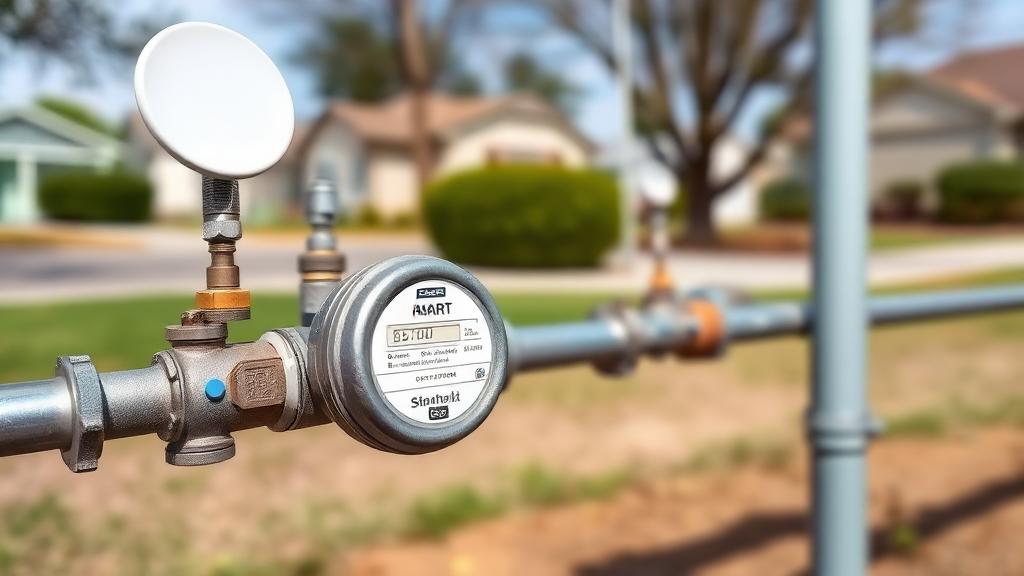
Smart water meters incorporate high-resolution flow measurement with integrated data logging and communication capabilities. Modern smart meters can record consumption at intervals as short as fifteen minutes, providing detailed consumption profiles that support advanced analytics and customer services. Many meters also include tamper detection, reverse flow detection, and leak detection algorithms that can alert the utility to potential issues.
The communication network connects smart meters to the head-end system. Several communication technologies are used in water AMI systems, including fixed radio frequency (RF) networks, cellular communication, and hybrid approaches. Fixed RF networks use a mesh or star topology with strategically placed collectors or repeaters that relay meter data to the head-end system. Cellular AMI systems use commercial cellular networks to transmit meter data directly to the cloud.
The head-end system receives, validates, and stores meter data. It provides the interface between the metering system and the utility's other enterprise systems, including billing, customer information, and geographic information systems. Modern head-end systems are typically cloud-based, providing scalability, redundancy, and accessibility from any location.
Benefits for Utility Operations
The operational benefits of AMI extend across virtually every function of a water utility, from meter reading and billing to distribution system management and capital planning.
Automated meter reading eliminates the cost and logistical challenges of manual meter reading. For a utility with fifty thousand meters read monthly, the labor cost of manual reading can exceed five hundred thousand dollars annually. AMI also eliminates estimated readings, which occur when meters are inaccessible, and reduces billing disputes caused by reading errors.
Enhanced leak detection is one of the most impactful benefits of AMI. Smart meters can detect continuous consumption patterns that indicate leaks on the customer side of the meter. Some systems can also detect distribution system leaks by analyzing minimum night flow and comparing metered consumption across zones. Early detection of leaks reduces water waste, prevents property damage, and improves customer satisfaction.
Demand management capabilities enable utilities to understand and influence water consumption patterns. Interval data reveals peak demand periods, seasonal variations, and the consumption characteristics of different customer classes. This information supports rate design, capacity planning, and targeted conservation programs.
Tamper and theft detection protects utility revenue by identifying meters that have been bypassed, reversed, or otherwise compromised. Smart meters can detect magnetic interference, unauthorized removal, and reverse flow conditions that may indicate theft or tampering.
Customer Engagement and Conservation
AMI technology enables a new level of customer engagement that benefits both the utility and its customers. Customer-facing portals and mobile applications can provide near-real-time consumption data, historical usage comparisons, and conservation tips.
Leak notification services alert customers to potential leaks on their property based on continuous consumption patterns detected by the smart meter. These notifications can prevent costly water damage and help customers conserve water. Many utilities report that customers value this service highly and that it improves customer satisfaction and trust.
Usage alerts allow customers to set consumption thresholds and receive notifications when their usage exceeds normal patterns. This capability is particularly valuable for customers who are trying to manage their water costs or who want to be alerted to unusual consumption that might indicate a problem.
Comparative usage reports show customers how their consumption compares to similar households in their area. Research has shown that social comparison feedback can motivate conservation behavior, with typical reductions of two to five percent in household water consumption.
Data Analytics and Decision Support
The high-resolution data generated by AMI systems creates opportunities for advanced analytics that can improve utility operations and planning. Several analytical applications have proven valuable for water utilities.
Revenue protection analytics identify meters that may be malfunctioning or undersizing based on consumption patterns. Meters showing declining consumption trends, unusually low consumption relative to account characteristics, or consumption patterns inconsistent with the property type may warrant investigation and potential replacement.
Distribution system analytics use AMI data to understand flow patterns, identify areas of high water age, and detect anomalies that may indicate distribution system issues. By aggregating consumption data at the zone or DMA level, utilities can calculate water balance and identify areas with elevated losses.
Asset management analytics support capital planning by identifying meters approaching the end of their useful life based on age, consumption patterns, and diagnostic data. Predictive models can estimate the remaining useful life of individual meters and recommend optimal replacement timing.
Customer segmentation analytics classify customers based on their consumption patterns, enabling targeted conservation programs, rate design, and customer service strategies. Understanding the diversity of consumption patterns within the customer base helps utilities develop more effective programs and policies.
Implementation Challenges and Best Practices
While the benefits of AMI are compelling, successful implementation requires careful planning and execution. Several challenges commonly arise during AMI deployments.
Technology selection is a critical early decision that affects the system's performance, cost, and longevity. Utilities should evaluate communication technologies, meter technologies, and head-end systems based on their specific requirements, including system size, geography, communication infrastructure, and integration requirements.
Deployment logistics can be challenging, particularly for large utilities. The installation of tens of thousands of meters requires careful planning of deployment schedules, workforce management, customer communication, and quality assurance. Many utilities phase their deployments over multiple years, using early phases to refine procedures and address issues before full-scale deployment.
Data management becomes more complex with AMI due to the volume and velocity of data generated. A single meter transmitting interval data every fifteen minutes generates over thirty-five thousand readings per year. For a utility with fifty thousand meters, this translates to over one and a half billion readings annually. Data management systems must be designed to handle this volume while providing timely access to data for operational and analytical purposes.
Customer communication is essential for building acceptance and trust. Customers should be informed about the benefits of AMI, the installation process, and how their data will be used and protected. Addressing concerns about privacy, health effects (from radio frequency emissions), and billing changes proactively can prevent opposition and build support.
Cybersecurity and Data Privacy
The connectivity of AMI systems introduces cybersecurity risks that must be addressed through comprehensive security measures. Smart meters and communication networks can be targets for cyberattacks aimed at disrupting utility operations, stealing customer data, or manipulating consumption records.
Security measures should include encryption of data in transit and at rest, authentication of devices and users, access controls based on the principle of least privilege, and regular security assessments and penetration testing. The NIST Cybersecurity Framework provides guidance for developing a comprehensive security program.
Data privacy is an increasingly important consideration as AMI systems collect detailed consumption data that can reveal information about occupant behavior and activities. Utilities should develop clear data privacy policies, obtain appropriate consent for data collection and use, and implement technical controls to protect customer data.
Conclusion
Advanced metering infrastructure represents a transformative technology for water utilities, enabling improvements in operational efficiency, customer service, and resource conservation. While implementation requires significant investment and careful planning, the benefits demonstrated by early adopters confirm that AMI is a sound investment for utilities committed to modernizing their operations and improving service to their communities. As the technology continues to mature and costs decline, AMI will become an essential component of modern water utility management.