Introduction
Supervisory control and data acquisition (SCADA) systems are the central nervous system of modern municipal water operations. They collect data from hundreds or thousands of field instruments, enable remote monitoring and control, and provide the operational visibility that utilities need to deliver reliable service. Yet the value of a SCADA system is entirely dependent on the quality of its integration with field instrumentation—if the data flowing into SCADA is inaccurate, delayed, or incomplete, the decisions based on that data will be compromised.
As municipal water providers upgrade their instrumentation to meet growing operational demands, SCADA integration best practices become increasingly important. The right integration approach ensures that new instruments deliver their full value from day one, while poor integration can create data silos, communication failures, and cybersecurity vulnerabilities. Working with instrumentation partners like KW Metering who understand both field devices and SCADA architecture is essential for successful system integration.
Communication Protocols: Choosing the Right Standard
The selection of communication protocols between field instruments and SCADA systems has long-term implications for system flexibility, maintenance, and expansion. The most common protocols in municipal water applications include 4-20mA analog, HART, Modbus, and newer Ethernet-based protocols.
Traditional 4-20mA analog signals remain widely used for their simplicity and reliability. A 4-20mA loop requires only two wires, is inherently noise-resistant, and provides a live signal that is independent of any digital communication system. However, analog signals carry only a single process variable per wire pair, limiting the information available to the SCADA system.
HART (Highway Addressable Remote Transducer) protocol overlays digital communication on the standard 4-20mA signal, enabling instruments to transmit multiple variables, diagnostic information, and configuration data without additional wiring. HART-enabled instruments can communicate their health status, calibration data, and secondary measurements alongside the primary process variable, providing the SCADA system with a much richer data set for operations and maintenance.
Modbus RTU and Modbus TCP/IP are widely supported protocols that enable multi-variable data transmission over serial or Ethernet connections. Many modern flow meters, analyzers, and level sensors support Modbus communication, making it a practical choice for utilities that want to access the full data capabilities of their instruments. Modbus TCP/IP, in particular, simplifies network architecture by leveraging standard Ethernet infrastructure.
Data Management and Historian Integration
Raw instrument data must be processed, validated, and stored in a manner that supports both real-time operations and long-term analysis. SCADA historians record time-stamped data at defined intervals, creating a continuous record of system performance that is essential for regulatory reporting, trend analysis, and forensic investigation of operational events.
Data validation at the SCADA level should include range checking, rate-of-change limits, and instrument status monitoring. When a flow meter reports a reading that exceeds its physical range or changes faster than physically possible, the SCADA system should flag the data as suspect and alert operators. This prevents erroneous data from triggering inappropriate control actions or corrupting historical records.
Totalization of flow data deserves special attention in municipal water applications. Flow totalizers accumulate volume over time, and errors in totalization can have significant financial and regulatory implications. SCADA systems should capture both instantaneous flow rates and totalized volumes from flow meters, with independent totalization in the SCADA historian serving as a cross-check against meter-internal totalizers.
Precision flow instruments from KW Metering provide both instantaneous and totalized outputs with high accuracy, ensuring that the data entering the SCADA historian is trustworthy for billing, reporting, and water balance calculations.
Remote Telemetry and Wireless Communication
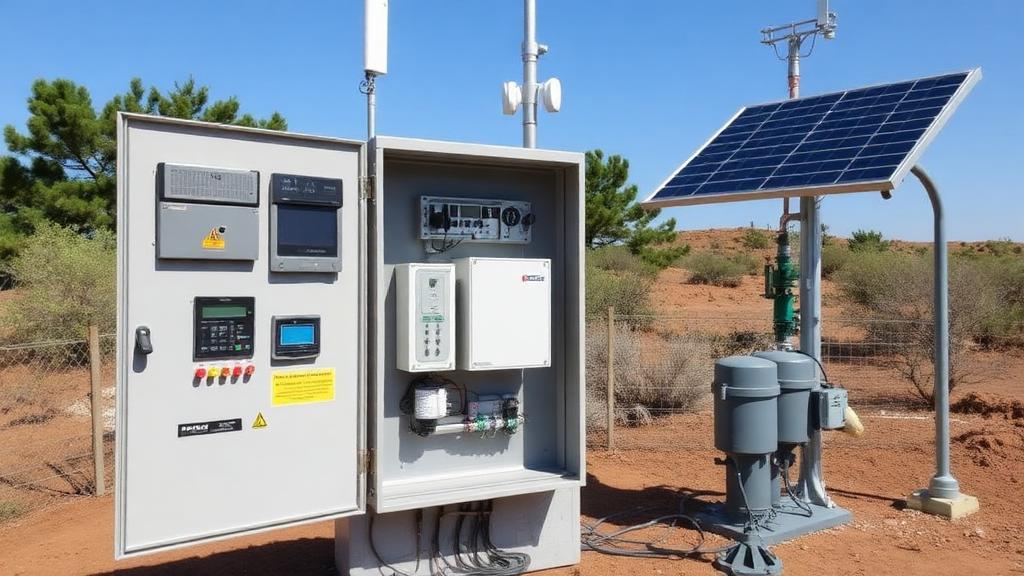
Municipal water distribution systems span large geographic areas, and many measurement points are located at remote sites without wired network connectivity. Remote telemetry units (RTUs) bridge this gap by collecting data from local instruments and transmitting it to the central SCADA system via cellular, radio, or satellite communication.
Cellular communication has become the dominant technology for remote SCADA telemetry, offering reliable coverage, reasonable data costs, and sufficient bandwidth for typical monitoring applications. 4G LTE networks provide the latency and throughput needed for real-time monitoring and control, while emerging 5G networks promise even greater capabilities. However, utilities should plan for cellular network transitions and ensure that RTU hardware supports future network generations.
Radio telemetry remains popular in areas with limited cellular coverage or for utilities that prefer to own their communication infrastructure. Licensed radio systems provide dedicated, interference-free communication channels, while unlicensed spread-spectrum systems offer lower costs with some trade-offs in reliability and security.
Power management at remote sites is a critical design consideration. Solar-powered RTU installations are common in municipal water applications, but must be designed with sufficient battery capacity for extended periods of low solar input. Instrument selection affects power budget—low-power instruments and communication protocols extend battery life and reduce solar panel requirements.
Cybersecurity Considerations
As SCADA systems become increasingly connected to enterprise networks and the internet, cybersecurity has emerged as a critical concern for municipal water utilities. High-profile cyber attacks on water treatment facilities have demonstrated that the threat is real and the consequences can be severe.
Network segmentation is the most fundamental cybersecurity measure for SCADA systems. The operational technology (OT) network should be physically or logically separated from the information technology (IT) network, with all traffic between the two networks passing through firewalls and demilitarized zones (DMZs). Field device networks should be further segmented from the SCADA server network.
Access control should follow the principle of least privilege—users and devices should have access only to the systems and data needed for their specific functions. Role-based access control, multi-factor authentication, and regular access reviews help prevent unauthorized access. Remote access for maintenance and troubleshooting should use encrypted VPN connections with logging and monitoring.
Patch management for SCADA systems requires a different approach than IT systems. Patches must be tested in non-production environments before deployment, and maintenance windows must be coordinated with operations to avoid disruptions. Many SCADA components have long lifecycles, and vendors may not provide security patches for older systems, requiring compensating controls to mitigate vulnerabilities.
Standardization and Documentation
Successful SCADA integration requires standardization of naming conventions, data structures, alarm definitions, and display formats. A SCADA standards document should define these conventions and serve as a reference for all system modifications and expansions. Consistent standards reduce training requirements, simplify troubleshooting, and enable meaningful comparison of data across different parts of the system.
Instrument data sheets should document the configuration, calibration, and communication settings of every field device connected to SCADA. This documentation is essential for troubleshooting communication issues, replacing failed instruments, and performing calibration verifications. Many utilities are transitioning to electronic instrument management systems that maintain this documentation in a centralized database linked to the SCADA system.
Conclusion
SCADA integration is the critical link between field instrumentation and operational decision-making in municipal water systems. By following best practices for communication protocols, data management, remote telemetry, cybersecurity, and standardization, utilities can ensure that their SCADA systems deliver the reliable, actionable data needed for efficient operations. Partnering with instrumentation experts like KW Metering who understand both the measurement and integration aspects of municipal water instrumentation ensures that every instrument delivers its full value to the SCADA system and, ultimately, to the utility's operational performance.